During the execution of the project, the backlog was meticulously crafted to align with the vision, strategy, and roadmap for the eCommerce search platform while ensuring alignment with the quarterly Objectives and Key Results (OKRs) of the company. The approach involved careful prioritization, iterative development, and a steadfast focus on delivering value to users while measuring what matters to the organization.
Prioritization based on Strategy and OKRs
- Conduct quarterly alignment sessions with key stakeholders to review company OKRs and identify strategic priorities for the upcoming period.
- Utilize a scoring framework to objectively evaluate backlog items based on their alignment with both the overarching strategy and the quarterly OKRs.
- Assign weights to backlog items based on their impact on OKR attainment, user value, technical feasibility, and alignment with strategic objectives.
- Regularly reassess backlog priorities based on changing business needs, market dynamics, and feedback from stakeholders and users, adjusting weights as necessary.
- Document the rationale behind prioritization decisions in the backlog, providing clear justification for the sequence of implementation and facilitating alignment across the organization.
User Stories and Epics
- Collaborate closely with UX designers, product managers, and stakeholders to define user stories and epics that address specific pain points and opportunities identified through user research and market analysis.
- Break down epics into smaller, more manageable user stories that can be completed within a single iteration or sprint, ensuring that each story delivers measurable value to users or the business.
- Prioritize user stories based on their impact on user experience, alignment with strategic objectives, and potential to contribute to OKR attainment, assigning them to specific OKRs where applicable.
- Use techniques such as story mapping or story slicing to visualize the relationship between user stories and epics and ensure comprehensive coverage of user needs and business requirements within the backlog.
- Regularly review and refine user stories and epics based on feedback from stakeholders, users, and ongoing testing and validation activities, ensuring that backlog items remain relevant and actionable.
Testing and Iterative Improvements
- Incorporate testing and iterative improvement cycles into the backlog planning process, allocating dedicated resources and timeframes for usability testing, A/B testing, and user feedback collection.
- Define acceptance criteria for each backlog item, including specific metrics or thresholds for success, to guide testing and validation efforts and ensure that user needs are met.
- Implement a structured testing process, including test planning, test case development, execution, and analysis, to systematically validate assumptions and hypotheses and inform iterative improvements.
- Use data analytics and user behavior tracking tools to gather quantitative insights into user interactions and preferences, complementing qualitative feedback from usability testing and user interviews.
- Iterate on features and functionalities based on test results and user feedback, prioritizing changes that have the greatest potential to impact key metrics and contribute to OKR attainment within the backlog.
Technical Debt Management
- Conduct regular technical debt assessments to identify areas of code complexity, redundancy, and inefficiency that may impact system performance and maintainability.
- Prioritize technical debt reduction efforts within the backlog based on their impact on OKR achievement, risk mitigation, and long-term maintainability, assigning them to specific OKRs where applicable.
- Implement a strategy for balancing new feature development with technical debt reduction, allocating dedicated time and resources to address high-priority technical debt items within each sprint or iteration.
- Utilize automated code analysis tools and static code analysis techniques to identify and remediate technical debt proactively during the development process, ensuring that backlog items are completed efficiently and effectively.
- Document technical debt reduction efforts and their impact on system performance, stability, and maintainability within the backlog, providing visibility into progress and informing future prioritization decisions.
Operations Maintenance and Support
- Allocate backlog items for ongoing operations maintenance and support activities, such as monitoring system performance, addressing security vulnerabilities, and providing customer support, prioritizing them based on their impact on OKR attainment.
- Define SLAs and incident response protocols within the backlog to ensure timely resolution of service interruptions and system issues, assigning specific backlog items to each OKR where applicable.
- Implement monitoring and alerting systems within the backlog to proactively identify and address potential performance bottlenecks, security vulnerabilities, and reliability issues, ensuring that backlog items are completed within specified timeframes.
- Provide training and support resources within the backlog to internal stakeholders, including customer support teams and operations staff, to enable effective incident management and resolution, contributing to OKR attainment and user satisfaction.
- Conduct regular post-incident reviews and root cause analyses within the backlog to identify underlying causes of service interruptions and implement preventive measures, ensuring continuous improvement and alignment with OKR targets.
Ticketing and Functional Delivery
- Break down backlog items into granular tasks or tickets with clear acceptance criteria, dependencies, and estimated effort, assigning them to specific OKRs and strategic objectives where applicable.
- Prioritize tickets within the backlog based on their alignment with OKRs, user needs, technical feasibility, and potential to deliver value to users and the business, ensuring that high-priority items are completed first.
- Assign tickets to cross-functional teams comprising product managers, designers, and developers within the backlog, facilitating collaboration and communication throughout the development process.
- Use agile project management tools to track the progress of tickets within the backlog, monitor dependencies, and facilitate effective communication within the team, ensuring transparency and alignment with OKR targets.
- Conduct regular sprint reviews and demos within the backlog to showcase completed work and gather feedback from stakeholders, informing future iterations and backlog refinement efforts and ensuring continuous improvement and alignment with OKRs.
Sprint Backlog
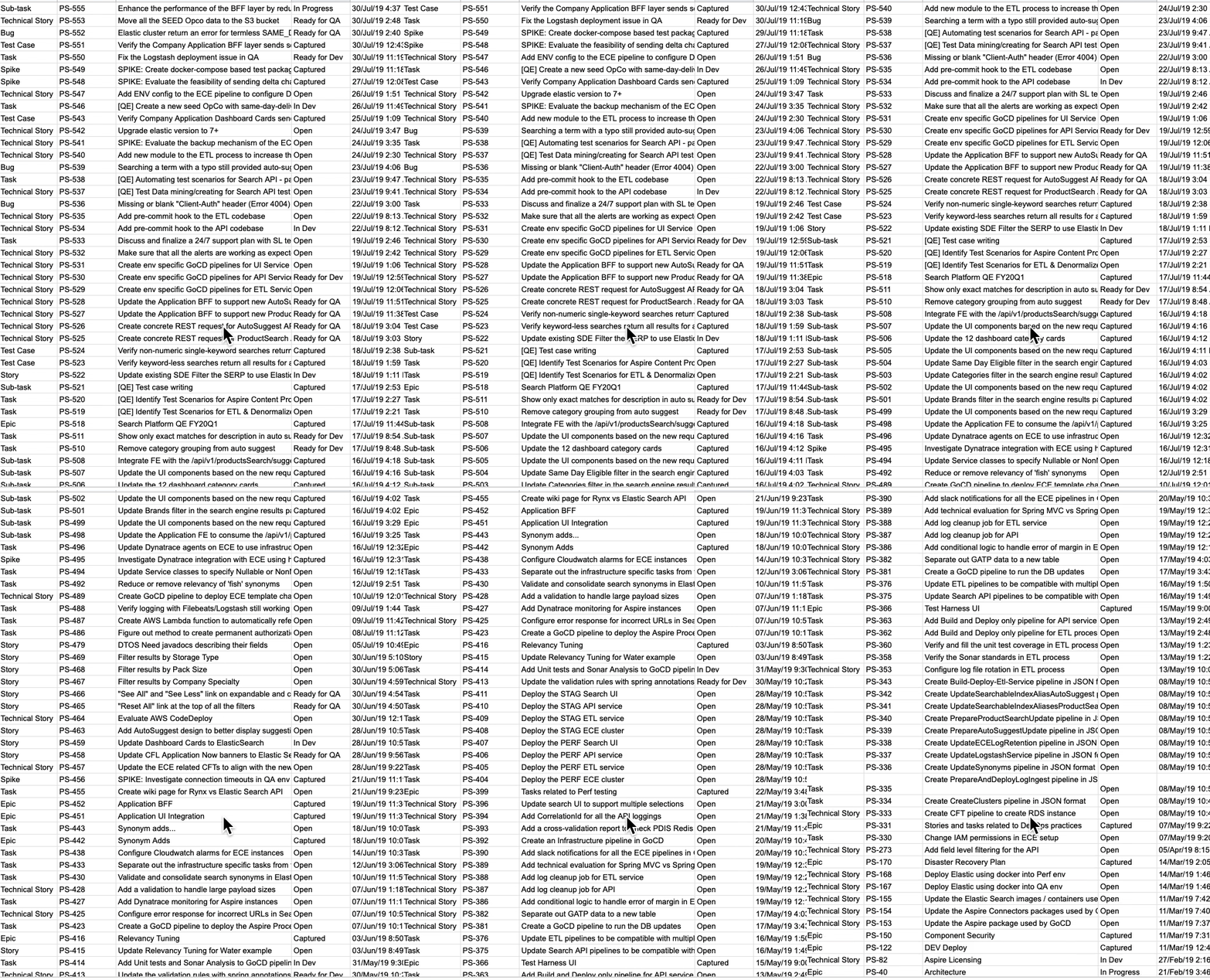
Sprint Backlogs tend to be much deeper with lots more communication between the core team working on the product initiative. This animation is a brief snapshot of the type of work we loaded into our sprint backlog to be planned for sprints.
By incorporating these detailed bullet points into each section of the structured approach, the backlog becomes a comprehensive tool for driving alignment with company goals and OKRs while facilitating iterative improvements and delivering value to users.